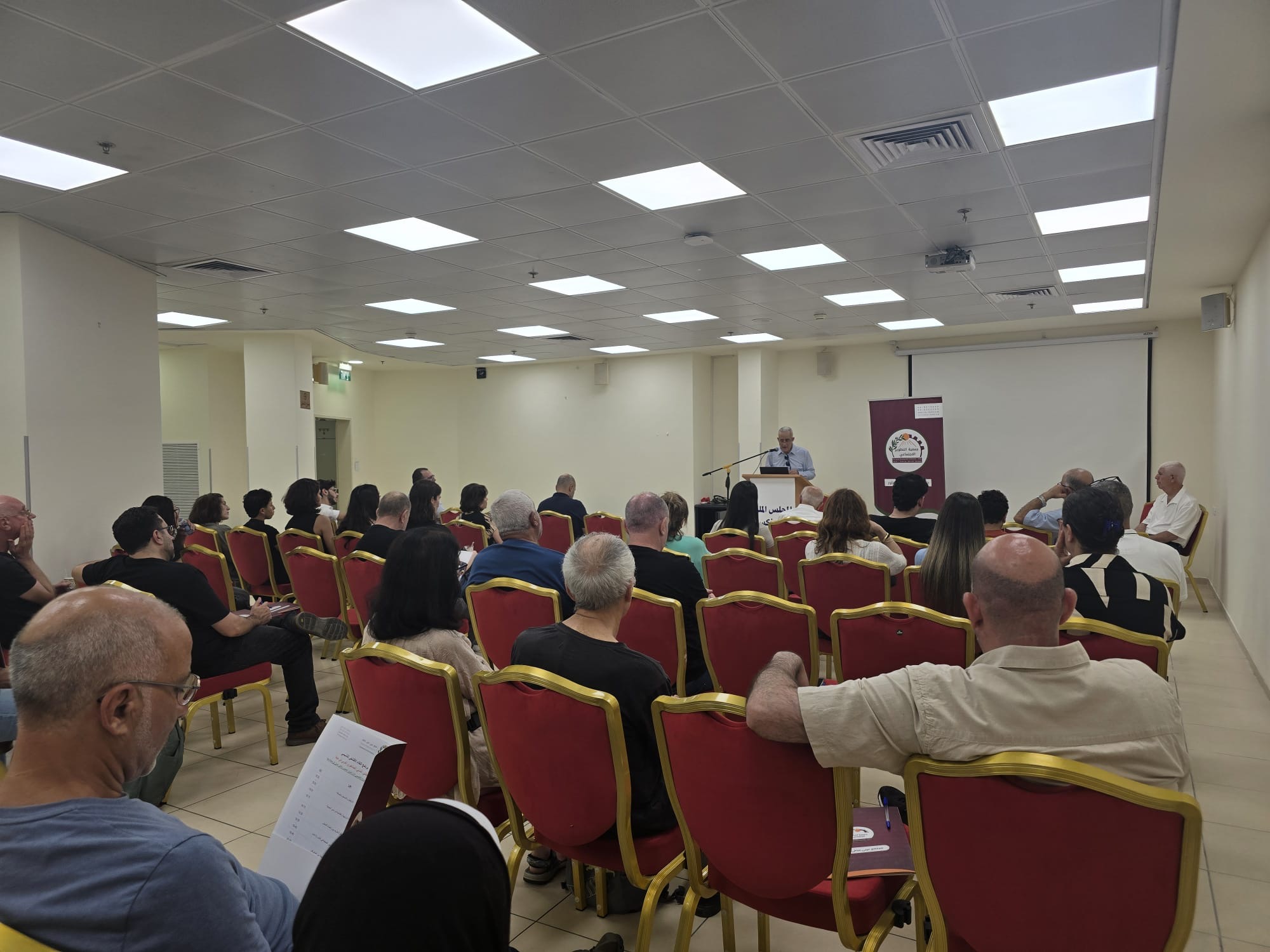
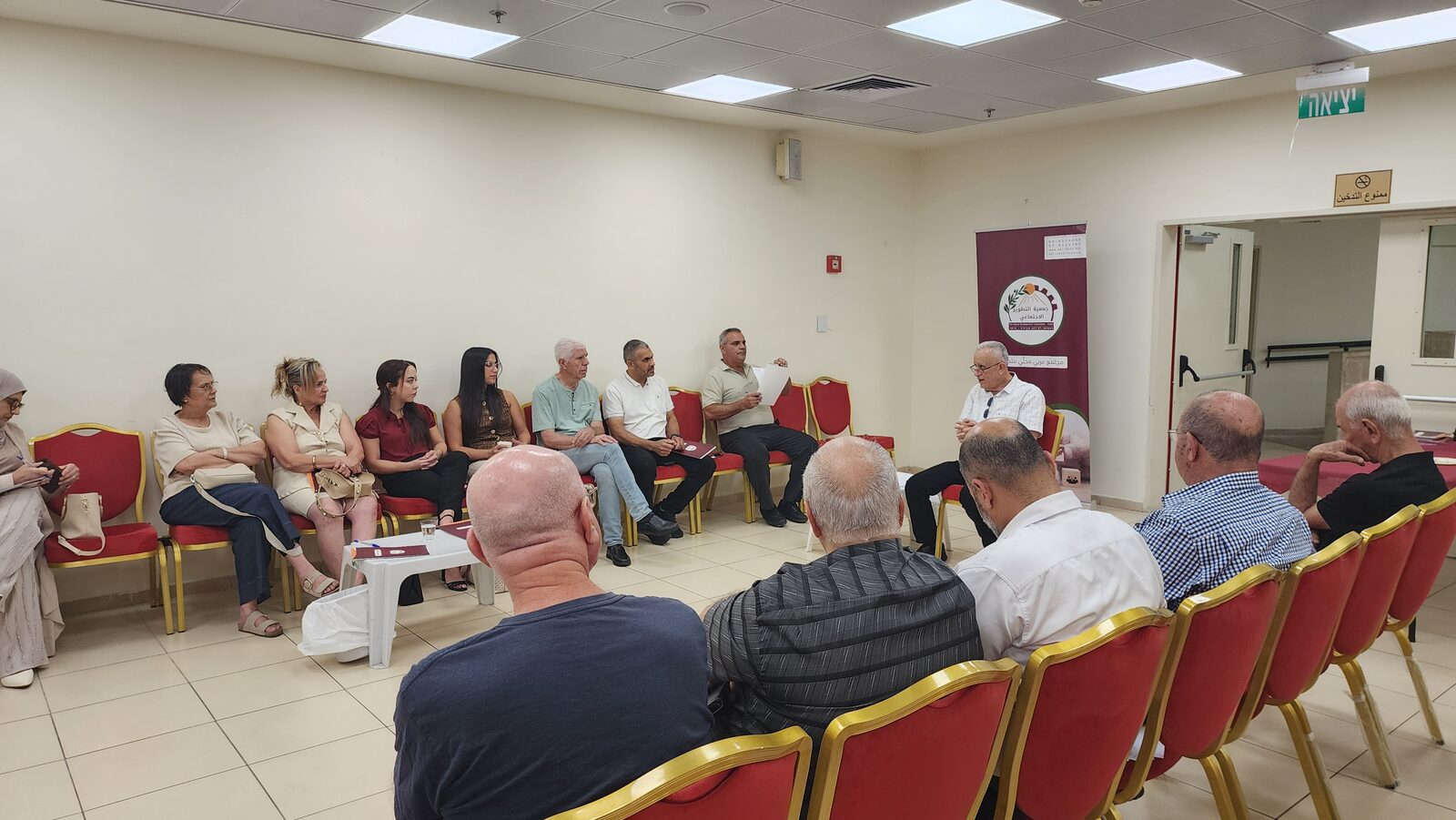
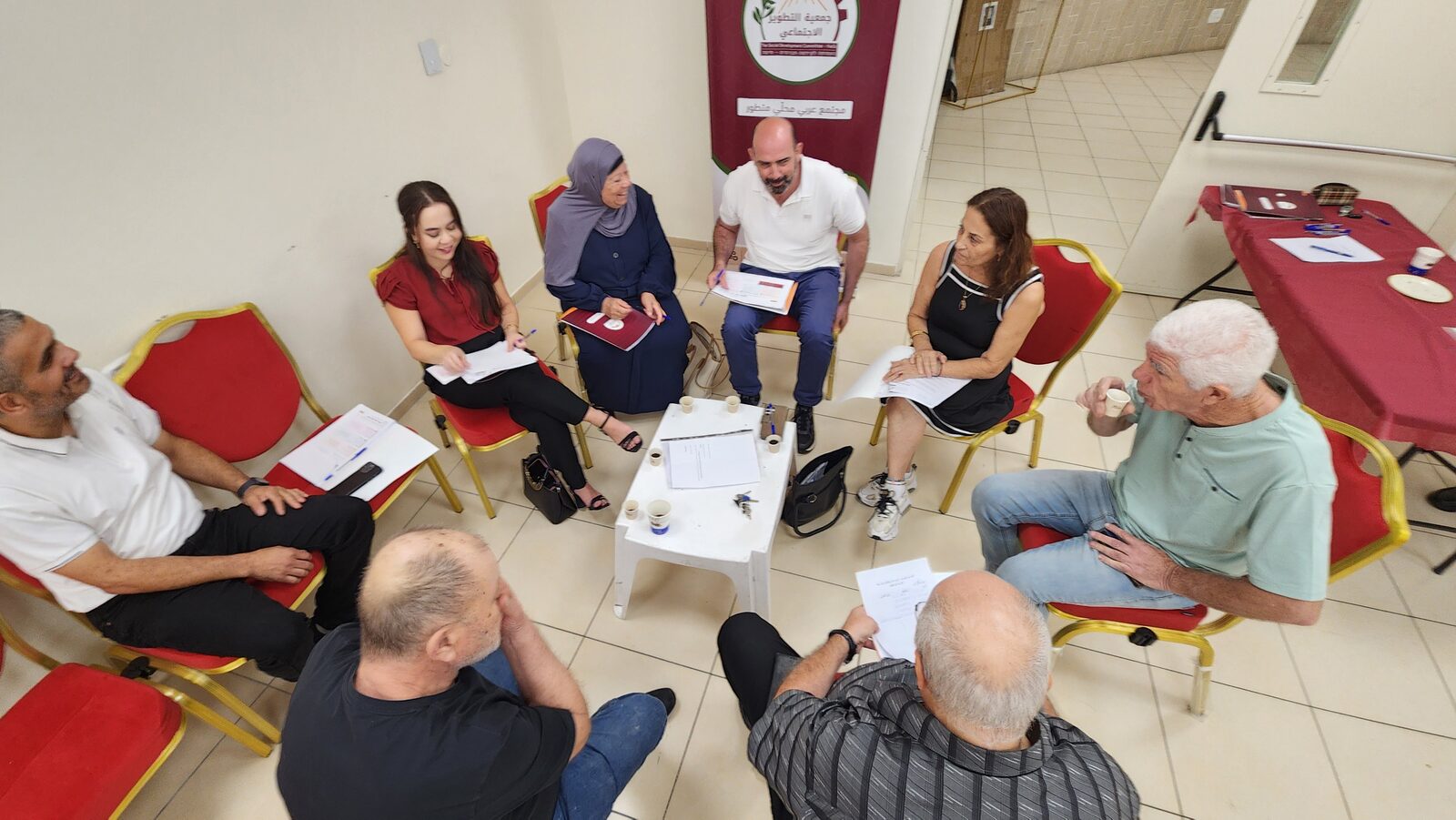
On 14 September 2026, the Arab Civic Council (المجلس المدني الجماهيري العربي في حيفا) held its second meeting in Haifa, with 31 residents of the city's Arab community taking part, continuing the path opened by the founding assembly in July. Where the first meeting named the issues, the second moved the work a practical step forward: organizing it inside the Council's three committees, and beginning to build clear mechanisms for ordering priorities, gathering information, and taking practical, followable steps.
The opening: central issues that need organization and study
SDC's director, Fathi Marshood, opened the meeting by welcoming participants and thanking them for coming, reading their continued attendance as a sign of commitment to the issues and to Haifa's Arab community as a whole. The issues the Council takes on, he noted, are central and complex; they require organization, planning and study, and the Council is still in its formative stage, building its working mechanisms.
The Council's direction is deliberate: to become, step by step, an organized and institutionalized community framework that works methodically, one that does not stop at raising issues but follows them through, holds the responsible bodies to account, and develops pathways of influence and change. SDC's role remains that of support and accompaniment: providing information, professional and media backing, and advocacy where needed, without ever replacing the Council's own responsibility or the independence of its committees.
An introduction round showed the breadth of the room: participants from different neighborhoods and professional backgrounds, with membership kept open to others who wish to join the committees in the coming stages.
Three committees begin their work
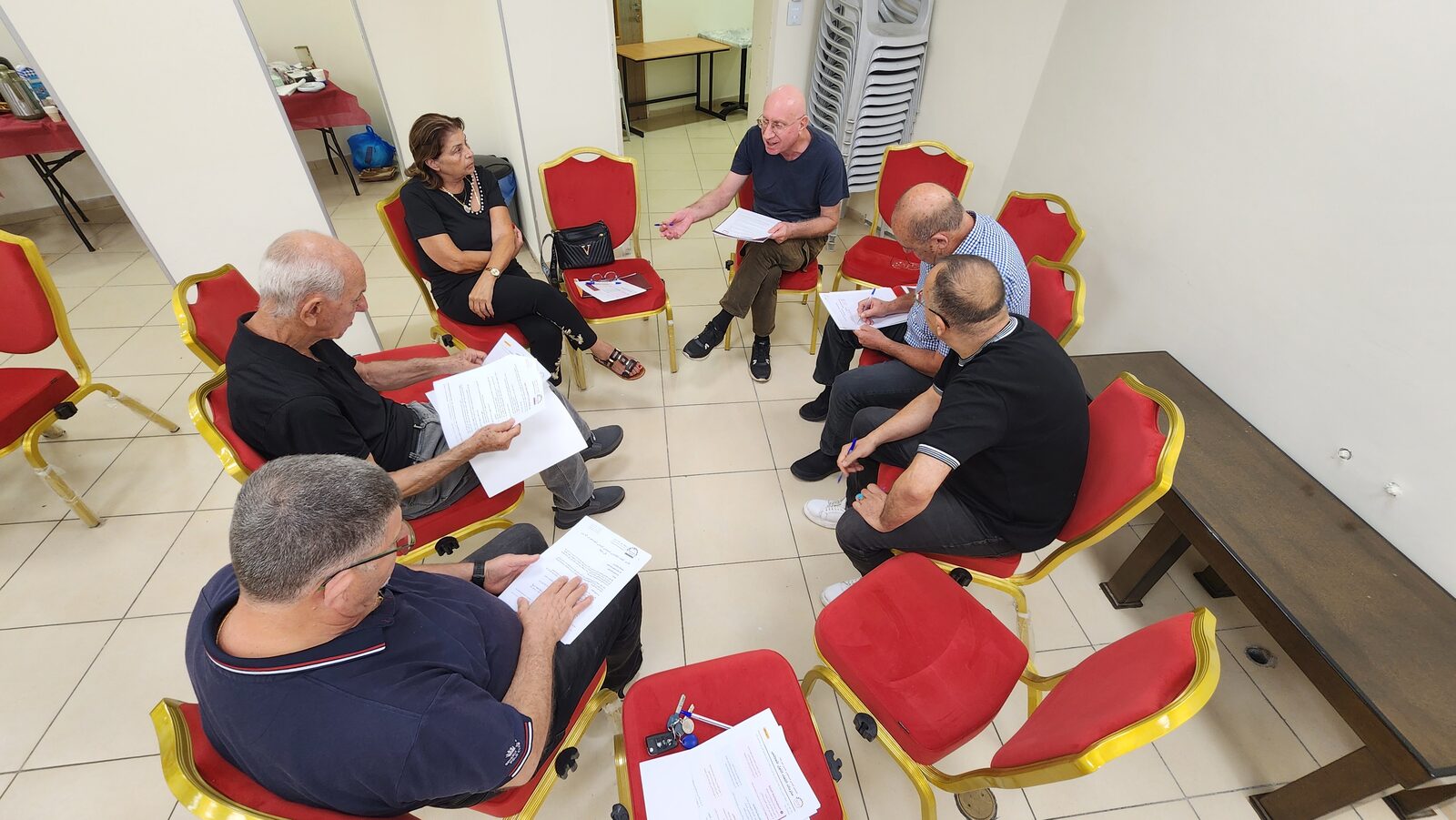
Participants divided into three committees: Education; Community Safety; and Planning and Infrastructure in the Arab neighborhoods. Each committee reviewed the issues raised at the founding assembly, took in the observations of new members, and began defining a working method and follow-up steps, before presenting its conclusions to the full meeting.
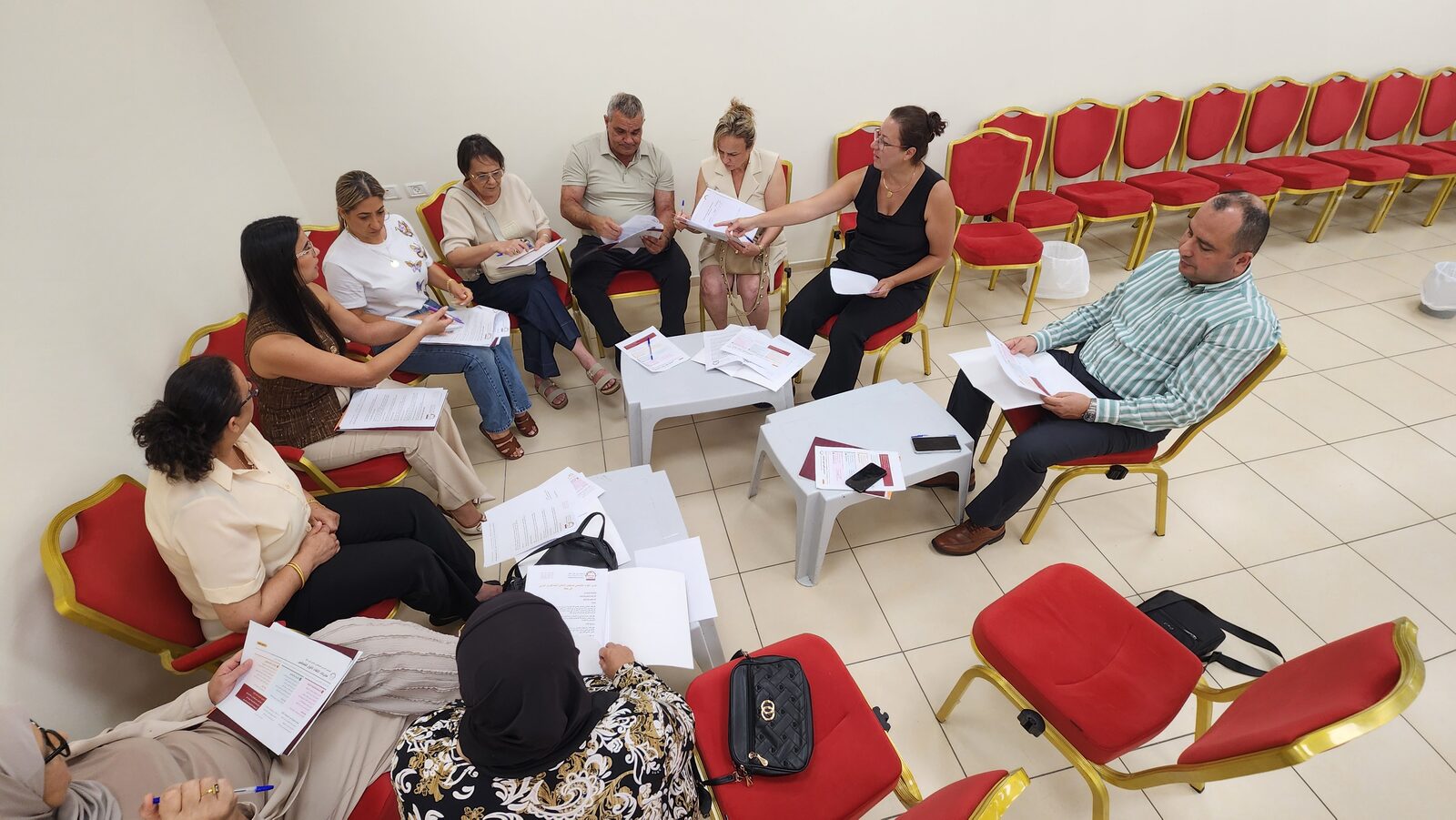
Education. Discussion widened the committee's list to around 12 topics, with clear agreement that it cannot work on all of them at once: the coming stage must focus on selection and ordering by agreed criteria. The committee decided to dedicate its next session to setting those criteria and to work toward choosing 3 or 4 concrete cases it can pursue seriously and methodically. It will examine following the Haifa municipality's own education committee meetings, will meet on a regular schedule, twice monthly at first, will choose a coordinator, and will draw on other Council committees where issues intersect, above all Planning and Infrastructure.
Planning and Infrastructure. The committee's discussion settled on a discipline: not broad headlines, but a working strategy built on concrete, defined files, each with a clear starting point, follow-up steps, and a goal progress can be measured against. It chose a first file in one of the city's neighborhoods, and will begin by studying it properly: gathering verified information on its legal and administrative status and the ownership involved, understanding how the site's use affects parking and residents' movement, and, before shaping any course of action, reaching the neighborhood's residents and listening to them. The committee meets again on 6 October 2026.
Community Safety. The committee worked on safety at more than one level, connecting violence in schools and streets, safety in public space, and the infrastructure problems that shape daily life: awareness programs for children and young people, using schools as the channel to reach them; missing or unclear traffic signals and pedestrian crossings in several Arab neighborhoods; traffic calming and the shortage of parking; congestion at school dismissal hours and the possibility of organizing parents around it; scooters ridden without helmets; and areas left unlit at night. It meets in early October to finish ordering the issues and decide which files move to practical follow-up.
What ran through all three
Common threads surfaced across the committees: moving from collecting issues to ordering them by criteria and choosing a limited number of workable files; insisting on accurate information before adopting a position or a course of action; building a follow-up and accountability mechanism so that issues do not stop at the discussion stage; and strengthening the committees' independence, with members carrying responsibility for meetings, decisions and follow-up while SDC provides support, facilitation and the professional resources required.
What comes next
The second meeting marks a practical transition from presenting issues to building a way of working inside the committees. The coming stage centers on the committees meeting independently, setting priority criteria, gathering information on the chosen files, and defining clear, followable steps with the relevant authorities. The committees' progress will be presented at the Council's next general meeting, allowing coordination between them and identifying what needs support, advocacy, or joint work.
For SDC, this is the model doing what it was designed to do: the strategy's municipal influence pathway, preparation, participation, documentation, follow-up, accountability, taking institutional form one committee at a time. Membership remains open to residents who wish to take part; they can reach SDC through the contact page.
The Social Development Committee Haifa is an Arab non-partisan association for community organising. It began its work in 1982 and was formally registered and founded in 1987. Across some four decades it has remained a central address for Arab residents in Haifa, working to organise and empower the city's Arab community to obtain its full entitlements and a fair share of services and resources.